
Bacteriostatic water vs. sterile water vs. saline
Three diluents commonly appear in peptide reconstitution: bacteriostatic water, sterile water for injection, and 0.9% sodium chloride (saline). They look the same in the vial but behave differently once a peptide is dissolved in them. This page explains the difference, when each is appropriate, and why the choice affects how long your reconstituted peptide stays viable.
Bacteriostatic water (BAC water)
Bacteriostatic water is sterile water with 0.9% benzyl alcohol added as a preservative. The benzyl alcohol slows bacterial growth — it doesn't make the water sterile forever, but it gives a multi-dose vial a useful shelf life of weeks to a couple of months in the fridge.
BAC water is the default diluent for peptide reconstitution because almost every peptide protocol involves drawing repeatedly from the same vial over many days. The 0.9% benzyl alcohol concentration is the same as in commercial multi-dose insulin vials and is generally well tolerated.
Stability after reconstitution with BAC water varies by peptide. Most peptides in BAC water are stable refrigerated for 28–60 days; some are stable longer. Always defer to the beyond-use date your compounding pharmacy specifies.
Sterile water for injection (SWFI)
Sterile water for injection contains no preservative — it's just sterile water. It is appropriate for single-use reconstitution where the entire reconstituted volume will be administered immediately. It is not appropriate for multi-dose vials, because once you puncture the seal there is no antimicrobial protection against bacterial ingress on subsequent draws.
SWFI is sometimes used in research settings where the peptide will be drawn into the syringe within minutes of reconstitution and not stored. For practical multi-day research use, BAC water is the safer default.
Sodium chloride 0.9% (saline)
Saline is sterile water plus dissolved salt at the same osmolarity as blood plasma. It is sometimes used as a peptide diluent when isotonicity matters at the injection site — particularly for intramuscular protocols and for peptides that are themselves dissolved in saline at manufacturing. Saline can also be used for IV peptides like NAD+ where compatibility is well-established.
Like SWFI, plain 0.9% saline contains no preservative and is best treated as single-use. Bacteriostatic 0.9% sodium chloride (saline with benzyl alcohol added) does exist and serves the same multi-dose role as BAC water, but it is less commonly stocked.
Which one should I use?
- Multi-dose subcutaneous peptide (the typical case for tirzepatide, semaglutide, BPC-157, TB-500, ipamorelin, etc.) → bacteriostatic water.
- Single-use research preparation drawn within minutes → sterile water for injection or BAC water; either works.
- Intramuscular or IV protocols where isotonicity is preferred → 0.9% saline (single-use) or bacteriostatic 0.9% saline (multi-dose).
- Patients with documented benzyl alcohol sensitivity → sterile water single-use, or bacteriostatic saline. Discuss with the prescribing clinician.
Why the diluent affects stability
Peptides degrade through hydrolysis (water-mediated bond cleavage), oxidation, and aggregation. The diluent influences all three:
- Benzyl alcohol in BAC water suppresses microbial growth, which is the most common failure mode for multi-dose vials kept past their stability window.
- Saline's ionic environment can affect the solubility and aggregation behaviour of certain peptides — most are unaffected, but some are not.
- All three diluents support hydrolysis at roughly the same rate, so refrigeration is the dominant lever for extending shelf life regardless of diluent.
Storage rules that apply to all three
- Refrigerate at 2–8 °C after reconstitution.
- Protect from direct light. A drawer in the fridge is fine.
- Don't freeze unless the manufacturer specifies it. Freeze-thaw cycles damage many peptide structures.
- Mark the vial with the reconstitution date. Use the pharmacy's stated beyond-use date as your hard limit.
- Inspect before each draw. If the solution becomes cloudy, develops particles, or changes colour, dispose of it.
Reconstitution supplies
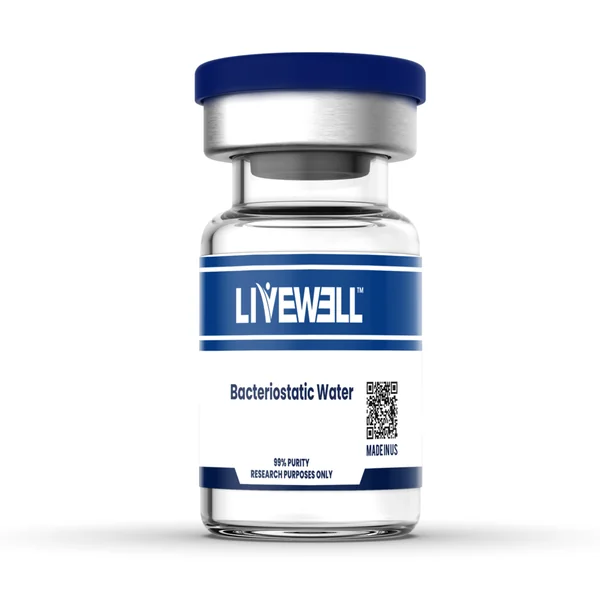
Bacteriostatic water and 0.9% sodium chloride from vendors manually vetted for third-party COA practice. LiveWell ships within the US; Particle ships to the EU, UK and Switzerland.

USA-based research vendor publishing a per-lot Certificate of Analysis and dispatching same-day via USPS, UPS Ground or FedEx, with 3–5 day standard delivery. Ships within the United States only. Also stocks reconstitution supplies and several compounds in oral tablet form, including orforglipron, tesofensine and dihexa.
Buy Bacteriostatic Water (3mL / 10mL) →Affiliate link — we may earn a commission at no extra cost to you.
 Particle Peptides
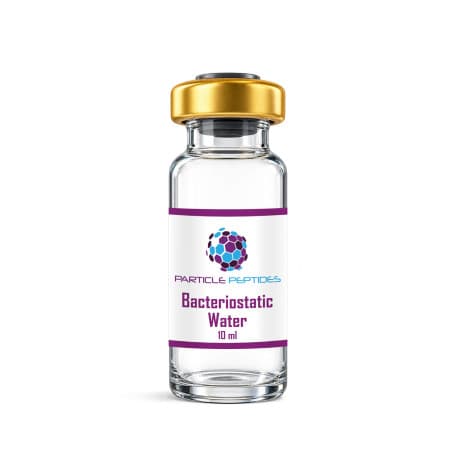
EU-based vendor (Slovakia, since 2015) shipping to EU, UK, and Switzerland. The only European supplier publishing all seven test parameters per batch (purity, identity, content, bioburden, endotoxins, heavy metals class 1 & 2). Manufacturer is cGMP / ISO 9001 / ISO 13485 compliant.
Buy Bacteriostatic Water 10mL →Affiliate link — we may earn a commission at no extra cost to you.
 Particle Peptides
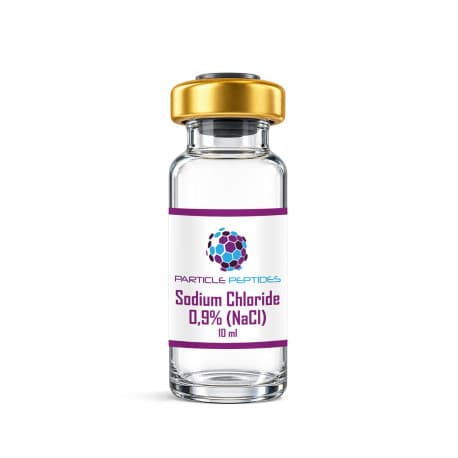
EU-based vendor (Slovakia, since 2015) shipping to EU, UK, and Switzerland. The only European supplier publishing all seven test parameters per batch (purity, identity, content, bioburden, endotoxins, heavy metals class 1 & 2). Manufacturer is cGMP / ISO 9001 / ISO 13485 compliant.
Buy Sodium Chloride 0.9% 10mL →Affiliate link — we may earn a commission at no extra cost to you.
PeptideDose is an educational reference. It is not medical advice and does not replace consultation with a licensed healthcare provider. Doses shown in presets are derived from published protocols and product labels — they are not personal recommendations.