
Ipamorelin vs Tesamorelin
Ipamorelin and tesamorelin are both growth-hormone secretagogues, but they sit at opposite ends of the GHS spectrum: tesamorelin is a stabilized GHRH analogue with full FDA approval for a specific indication (HIV-associated lipodystrophy, brand name Egrifta), while ipamorelin is a ghrelin-pathway peptide that has never been FDA-approved in any indication. They are not direct alternatives — the question is usually about which mechanism and which regulatory status fits the use case. This page summarises mechanism, dose, FDA status, and side-effect profile sourced from peer-reviewed literature and the Egrifta prescribing information. It is an educational reference, not medical advice.
Quick comparison
| Ipamorelin | Tesamorelin | |
|---|---|---|
| Class | GHRP / selective ghrelin mimetic | Stabilized GHRH analogue |
| Receptor | GHS-R1a (ghrelin receptor) | GHRH receptor on pituitary somatotrophs |
| FDA approval | Never approved | Approved (Egrifta, Theratechnologies, 2010) |
| Approved indication | — | HIV-associated lipodystrophy (visceral fat reduction) |
| Common research dose | 200–300 µg, 1–3× daily | 1–2 mg, once daily |
| Half-life | ~2 hours | ~26 minutes (longer pharmacological action) |
| Brand name | None | Egrifta, Egrifta SV |
| Effect on cortisol / prolactin | Minimal | Minimal |
Mechanism: ghrelin pathway vs GHRH pathway
Ipamorelin and tesamorelin act on the two parallel pathways that drive pituitary growth-hormone release. Ipamorelin binds the GHS-R1a receptor (also activated by endogenous ghrelin and the GHRP-class compounds GHRP-2 and GHRP-6), triggering GH release with a profile cleaner than other GHRPs — minimal cortisol or prolactin elevation, no significant appetite-stimulating effect.
Tesamorelin is a stabilized 44-amino-acid GHRH analogue: structurally similar to native GHRH but with a trans-3-hexenoyl modification on the N-terminus that resists enzymatic degradation and substantially extends its pharmacological action. Tesamorelin binds GHRH receptors on pituitary somatotrophs and stimulates GH release with a pattern that closely matches the natural pulsatile rhythm.
FDA approval and approved indication
Tesamorelin is FDA-approved as Egrifta (Theratechnologies, original approval 2010, reformulated as Egrifta SV in 2019). The approved indication is the reduction of excess abdominal fat in HIV-infected patients with lipodystrophy — a specific syndrome where antiretroviral therapy causes visceral adipose tissue accumulation. The approval was based on multiple Phase 3 trials showing meaningful reductions in visceral adipose tissue at the 2 mg daily dose.
Ipamorelin has never received FDA approval in any indication. Phase 2 trials in functional gastrointestinal disorders were conducted but did not advance to approval. It is accessible only via US regulated compounding pharmacies (following the February 2026 HHS reclassification) or the international research-peptide market.
The practical implication: Egrifta is a commercially marketed prescription product with insurance pathways for the approved HIV-lipodystrophy indication. For any other use, including general GH support or off-label visceral-fat applications, both peptides are typically accessed via compounding pharmacies.
Dose schedules side by side
Tesamorelin's labelled dose for HIV-lipodystrophy is 2 mg subcutaneous once daily. Compounding-pharmacy protocols for general use are typically 1–2 mg once daily, often timed in the morning. At a 5 mg / 2 mL reconstitution (2.5 mg/mL), a 1 mg tesamorelin dose draws to 40 units on a U-100 insulin syringe.
Ipamorelin uses substantially smaller doses — 200–300 µg per injection — but with more daily flexibility. Common protocols: once daily at bedtime, twice daily (morning and evening), or three times daily. At a 5 mg / 2 mL reconstitution, a 200 µg ipamorelin dose draws to 8 units on a U-100 syringe.
The dose-magnitude difference reflects the receptor: GHRH receptor activation requires a much larger absolute amount of peptide than ghrelin-receptor activation to produce a comparable GH pulse.
Side effects: documented vs sparse
Tesamorelin has the more documented side-effect profile because of its FDA approval. The Egrifta label lists: arthralgia (joint pain) in roughly 13% of patients, peripheral edema (swelling), injection-site reactions, hyperglycemia (relevant for diabetic patients), and a small risk of fluid retention. The HIV-lipodystrophy population in the approval trials had additional baseline conditions, so generalisation to other populations is uncertain.
Ipamorelin's side-effect profile in published research-peptide literature is described as minimal: occasional mild headache, transient dizziness, injection-site reactions. Crucially, it does not significantly elevate cortisol or prolactin (a problem with GHRP-2 and GHRP-6) and does not stimulate appetite. The safety database is much smaller than tesamorelin's.
Both peptides share the theoretical GH-class risks at supraphysiological doses: insulin-sensitivity changes, joint comfort, theoretical effects on tissue growth. Research-peptide protocols use sub-therapeutic doses partly to minimise these.
How to choose between them
If the goal is the FDA-approved indication (HIV-associated visceral lipodystrophy), tesamorelin is the standard of care and the only one of the two with regulatory approval and clinical-trial evidence in that population.
If the goal is general GH support — for sleep quality, recovery, or longevity-adjacent endpoints — neither peptide has approved indications and the choice usually comes down to dosing convenience (ipamorelin is cheaper per dose, dosed more flexibly), receptor selectivity (ipamorelin's GHRP route avoids the GHRH receptor saturation issue at chronic high doses), and tolerance (ipamorelin's documented side-effect profile is milder, though smaller).
Many practitioners stack a GHRH-class peptide with ipamorelin for synergistic GH release. Tesamorelin can serve in that role, though CJC-1295 is the more common partner because of cost and dose convenience for non-HIV-lipodystrophy use cases.
Where researchers source these
Vendors below have been manually vetted for third-party COA practice and shipping reliability. Verify the current Certificate of Analysis on the vendor's product page before purchase.
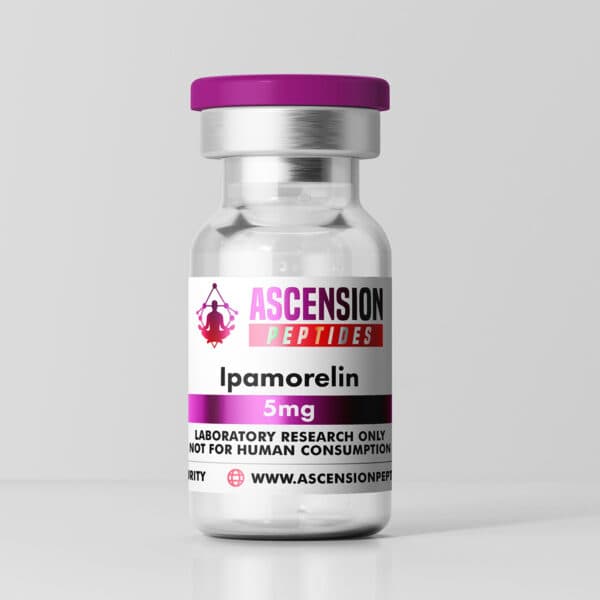
 Ascension Peptides
USA-based research vendor (Castle Rock, Colorado) publishing a per-batch Certificate of Analysis library with public lot IDs, so a vial can be matched to its own COA before and after purchase. Recent HPLC purity 99.79–99.98% across the catalog. Ships from the US and carries the full GLP-1 reference range alongside repair, longevity and cosmetic compounds.
Buy Ipamorelin 5mg →Affiliate link — we may earn a commission at no extra cost to you.
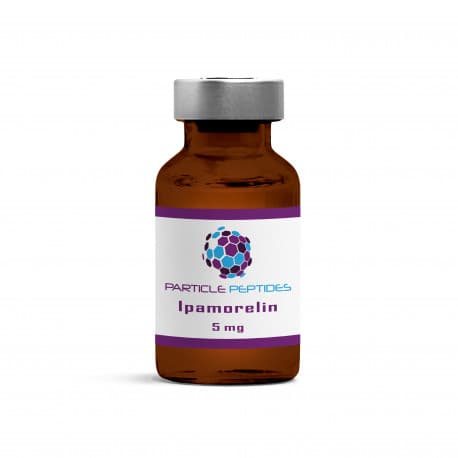
 Particle Peptides
EU-based vendor (Slovakia, since 2015) shipping to EU, UK, and Switzerland. The only European supplier publishing all seven test parameters per batch (purity, identity, content, bioburden, endotoxins, heavy metals class 1 & 2). Manufacturer is cGMP / ISO 9001 / ISO 13485 compliant.
Buy Ipamorelin 5mg →Affiliate link — we may earn a commission at no extra cost to you.
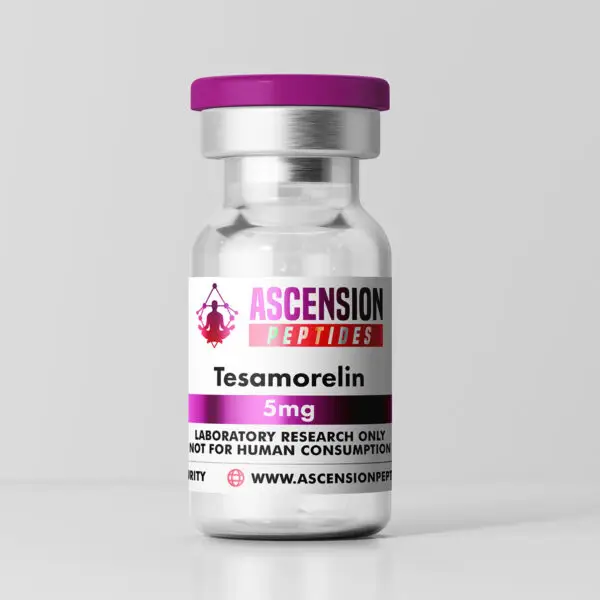
 Ascension Peptides
USA-based research vendor (Castle Rock, Colorado) publishing a per-batch Certificate of Analysis library with public lot IDs, so a vial can be matched to its own COA before and after purchase. Recent HPLC purity 99.79–99.98% across the catalog. Ships from the US and carries the full GLP-1 reference range alongside repair, longevity and cosmetic compounds.
Buy Tesamorelin 5mg →Affiliate link — we may earn a commission at no extra cost to you.
Frequently asked questions
- Is tesamorelin stronger than ipamorelin?
- Tesamorelin is dosed in mg quantities (1–2 mg per dose) versus ipamorelin's µg quantities (200–300 µg) — but that reflects different receptor pharmacology, not a direct potency comparison. Each peptide produces a meaningful GH pulse at its typical research dose.
- Can I use tesamorelin for general weight loss?
- Tesamorelin's approved indication is HIV-associated visceral lipodystrophy specifically. Any other use is off-label and should be discussed with a licensed prescriber. The compound is not approved as a general weight-management agent.
- Why is tesamorelin so much more expensive than ipamorelin?
- Egrifta is a commercially marketed prescription product with associated regulatory and manufacturing costs. Compounded tesamorelin is cheaper but still typically several times the cost per dose of compounded ipamorelin, partly due to the larger peptide mass per dose (mg vs µg).
- Do they have FDA approval?
- Tesamorelin is FDA-approved (Egrifta, 2010) for HIV-associated lipodystrophy. Ipamorelin has never been FDA-approved in any indication.
Compute a dose for either peptide
PeptideDose is an educational reference. It is not medical advice and does not replace consultation with a licensed healthcare provider. Doses shown in presets are derived from published protocols and product labels — they are not personal recommendations.