
Sermorelin vs Ipamorelin
Sermorelin and ipamorelin are both growth-hormone secretagogues — peptides that stimulate the body's own pituitary release of growth hormone rather than supplementing GH directly — but they act on two completely different receptors. Sermorelin is a growth-hormone-releasing-hormone (GHRH) analogue; ipamorelin is a selective ghrelin mimetic that binds the GH-secretagogue receptor (GHS-R1a). Because the two pathways converge on GH release synergistically, they are often combined in research-peptide protocols rather than chosen as alternatives. This page summarises mechanism, dose, side-effect profile, and FDA history for each — sourced from peer-reviewed literature and publicly available product labels. It is an educational reference, not medical advice.
Quick comparison
| Sermorelin | Ipamorelin | |
|---|---|---|
| Class | GHRH analogue (peptide 1-29 of native GHRH) | GHRP / selective ghrelin mimetic |
| Receptor | GHRH receptor on pituitary somatotrophs | GHS-R1a (ghrelin receptor) |
| FDA approval history | Approved as Geref (1997, voluntarily withdrawn 2008) | Never FDA-approved |
| Common research dose | 100–300 µg once daily | 200–300 µg 1–3× daily |
| Half-life | ~10–15 minutes | ~2 hours |
| Effect on cortisol / prolactin | Minimal (no significant elevation) | Minimal — among the cleanest GHRPs |
| Often stacked with | GHRP-class peptides (ipamorelin, GHRP-2) | GHRH-class peptides (sermorelin, CJC-1295) |
| Pulsatility preserved | Yes — preserves natural GH pulse | Yes — works on a separate pulse-amplification pathway |
Mechanism: two routes to the same hormone
Pituitary somatotrophs produce growth hormone in response to two parallel signalling inputs from the hypothalamus: GHRH stimulation (which says "release more GH") and ghrelin / GHS-R1a activation (which both releases more GH and amplifies the response to a GHRH signal). Sermorelin and ipamorelin act on these two receptors respectively.
Sermorelin is the synthetic 1-29 fragment of native GHRH — the biologically active portion of the full 44-amino-acid hormone. It binds GHRH receptors on pituitary somatotrophs and triggers GH release in roughly the same pulse-amplitude pattern as endogenous GHRH would.
Ipamorelin binds the GHS-R1a receptor (the same receptor activated by ghrelin and synthetic GHRPs like GHRP-2 and GHRP-6). It is described as the cleanest GHRP because it stimulates GH release with minimal effect on cortisol, prolactin, or appetite — three off-target effects that limit other GHRP-class compounds. Combining a GHRH peptide with a GHRP peptide produces a synergistic GH pulse that is larger than either alone.
Why they are commonly combined rather than compared
Because sermorelin and ipamorelin act on different receptors, their effects on GH release are additive and amplifying rather than overlapping. A common research-peptide protocol stacks them together — though more commonly the GHRH partner of choice is CJC-1295 (a longer-acting GHRH analogue) rather than sermorelin, because CJC-1295 reduces the daily-dosing burden.
If the choice is strictly between sermorelin and ipamorelin as a single agent, the practical question is which pathway is the preferred lever. Sermorelin amplifies the natural GHRH signal and may be better suited to younger users with intact pituitary GHRH responsiveness. Ipamorelin can be useful where the goal is a clean ghrelin-pathway GH pulse without affecting other axes, or where a longer dose-spacing window is desirable.
Dose schedules and frequency
Sermorelin's short half-life (~10–15 min) and natural-pulse-preserving action favour once-daily dosing at bedtime — the timing matches the body's largest endogenous GH pulse, which occurs during the first hours of slow-wave sleep. Common research dose: 100–300 µg subcutaneous, once nightly. The 5 mg vial reconstituted at 5 mg / 2 mL (2.5 mg/mL) means a 200 µg dose draws to 8 units on a U-100 insulin syringe.
Ipamorelin's longer pharmacological action (~2 hours) accommodates either once-daily dosing at bedtime or split protocols of 200–300 µg one to three times daily. Some protocols dose immediately pre-workout for the synergistic effect with exercise-induced GH release. At a 5 mg / 2 mL reconstitution, a 200 µg ipamorelin dose draws to 8 units on a U-100 syringe — the same as sermorelin.
Side effects and safety profile
Sermorelin's recorded side-effect profile from the Geref clinical-use era includes flushing at the injection site, transient headache, mild nausea, and rarely an allergic reaction at the injection site. Because Geref was approved (and withdrawn for commercial reasons rather than safety reasons), the safety database for sermorelin is larger than for any other compound discussed on this page.
Ipamorelin has a much smaller human safety database (no FDA approval) but is consistently described in research literature as having minimal side effects relative to other GHRPs. Specifically, it does not significantly elevate cortisol or prolactin and does not produce the appetite-stimulating effects associated with GHRP-2 and GHRP-6 — its design intent was a clean GH-only ghrelin agonist. Common reported events: mild headache, dizziness, injection-site reactions.
Both peptides share the GH-class theoretical risks: sustained GH elevation could in principle affect insulin sensitivity, joint comfort, and tissue growth at supraphysiological doses. Research-peptide protocols typically use sub-therapeutic doses to minimise these risks.
FDA history and regulatory status
Sermorelin was FDA-approved in 1997 under the brand name Geref, indicated for paediatric growth-hormone-deficiency diagnosis and treatment. It was voluntarily withdrawn from the US market in 2008 by Serono — the manufacturer cited commercial reasons rather than safety or efficacy concerns. Sermorelin remains accessible via US regulated compounding pharmacies, which is the dominant supply route for research-peptide use today.
Ipamorelin has never been FDA-approved. It is accessible only through US regulated compounding pharmacies (following the February 2026 HHS reclassification permitting peptide compounding) or the international research-peptide market. Phase 2 trials in functional gastrointestinal disorders were conducted but did not lead to FDA approval.
Where researchers source these
Vendors below have been manually vetted for third-party COA practice and shipping reliability. Verify the current Certificate of Analysis on the vendor's product page before purchase.
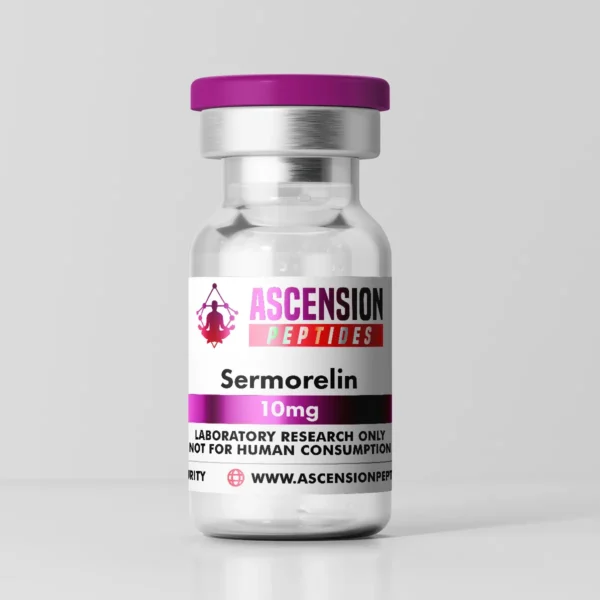
 Ascension Peptides
USA-based research vendor (Castle Rock, Colorado) publishing a per-batch Certificate of Analysis library with public lot IDs, so a vial can be matched to its own COA before and after purchase. Recent HPLC purity 99.79–99.98% across the catalog. Ships from the US and carries the full GLP-1 reference range alongside repair, longevity and cosmetic compounds.
Buy Sermorelin 10mg →Affiliate link — we may earn a commission at no extra cost to you.
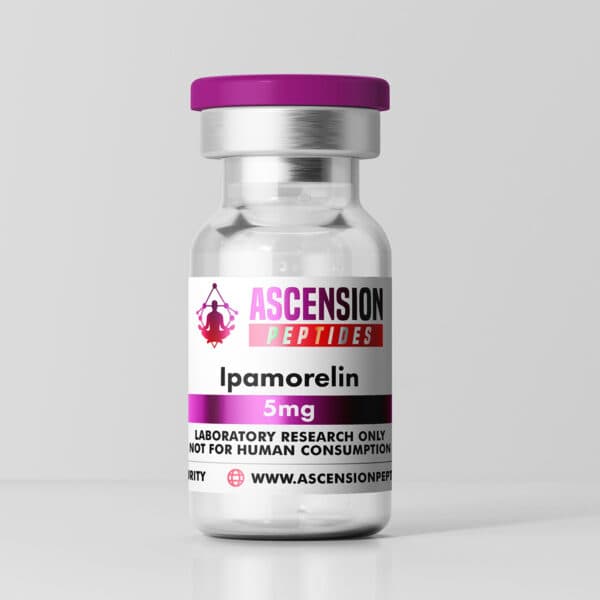
 Ascension Peptides
USA-based research vendor (Castle Rock, Colorado) publishing a per-batch Certificate of Analysis library with public lot IDs, so a vial can be matched to its own COA before and after purchase. Recent HPLC purity 99.79–99.98% across the catalog. Ships from the US and carries the full GLP-1 reference range alongside repair, longevity and cosmetic compounds.
Buy Ipamorelin 5mg →Affiliate link — we may earn a commission at no extra cost to you.
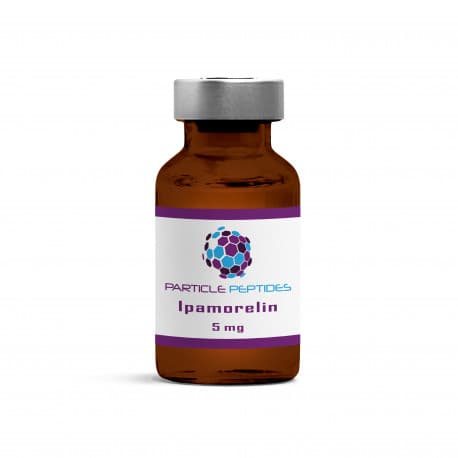
 Particle Peptides
EU-based vendor (Slovakia, since 2015) shipping to EU, UK, and Switzerland. The only European supplier publishing all seven test parameters per batch (purity, identity, content, bioburden, endotoxins, heavy metals class 1 & 2). Manufacturer is cGMP / ISO 9001 / ISO 13485 compliant.
Buy Ipamorelin 5mg →Affiliate link — we may earn a commission at no extra cost to you.
Frequently asked questions
- Should I take sermorelin and ipamorelin together?
- Many research-peptide protocols combine a GHRH peptide and a GHRP peptide for synergistic GH release. Sermorelin + ipamorelin is one such combination, though the more common GHRH partner is CJC-1295 because of its longer half-life. The decision belongs with your prescriber.
- Which has fewer side effects?
- Both are described in published literature as having mild side-effect profiles. Sermorelin has the larger human safety database (FDA-era data); ipamorelin is described as the cleanest of the GHRPs but has a much smaller human dataset.
- Was sermorelin removed from the market because it was unsafe?
- No. Serono voluntarily withdrew Geref (sermorelin) in 2008 citing commercial reasons. The compound remained accessible via compounding pharmacies and is widely used in research-peptide and longevity-clinic settings today.
- How do the doses compare?
- Both are dosed in the 100–300 µg per-injection range. Sermorelin is typically once daily at bedtime; ipamorelin is dosed once or twice daily depending on protocol.
Compute a dose for either peptide
PeptideDose is an educational reference. It is not medical advice and does not replace consultation with a licensed healthcare provider. Doses shown in presets are derived from published protocols and product labels — they are not personal recommendations.