
BPC-157 Calculator
BPC-157 (also known as Pentadeca Arginate (analogue)) reconstitution and dosage reference — calculate vial concentration, BAC water volume, and exact syringe units below.
At the reference preset of a 5mg BPC-157 vial reconstituted with 2.5 mL of bacteriostatic water, a 0.25mg dose measures 12.5 units on a U-100 insulin syringe.
BPC-157 (Body Protection Compound 157) is a synthetic 15-amino-acid pentadecapeptide derived from a sequence found in human gastric juice.
- Concentration
- 2 mg/mL
- Draw volume
- 0.125 mL
- Units (U-100)
- 12.5
- Doses per vial
- ≈ 20
- Reference preset
- 5mg · 2.5mL · 0.25mg
Reference values from the default preset — adjust the calculator below for your vial.
How to use this calculator›
- 1. Vial — the peptide amount printed on the vial, in milligrams.
- 2. BAC water — the bacteriostatic water added to the vial. More water means a lower concentration and a larger, easier-to-read draw.
- 3. Dose — the single dose being measured, in milligrams.
- 4. Syringe — the barrel being drawn into. The diagram rescales to that syringe, so the same dose sits at a different mark on a 0.3 mL barrel than on a U-100.
Educational reference only — not medical advice or a dosing recommendation.
What is BPC-157?
BPC-157 (Body Protection Compound 157) is a synthetic 15-amino-acid pentadecapeptide derived from a sequence found in human gastric juice. Animal studies report effects on tendon, ligament, and gastrointestinal tissue repair, but no Phase 3 human trials have been completed. Typical research-protocol dosing is 200–500 µg one to three times daily, subcutaneous or intramuscular. At 5 mg / 2.5 mL (2 mg/mL concentration), a 250 µg dose draws to 12.5 units on a U-100 insulin syringe.
Where researchers source this
Vendors below have been manually vetted for third-party COA practice and shipping reliability. Verify the current Certificate of Analysis on the vendor's product page before purchase.
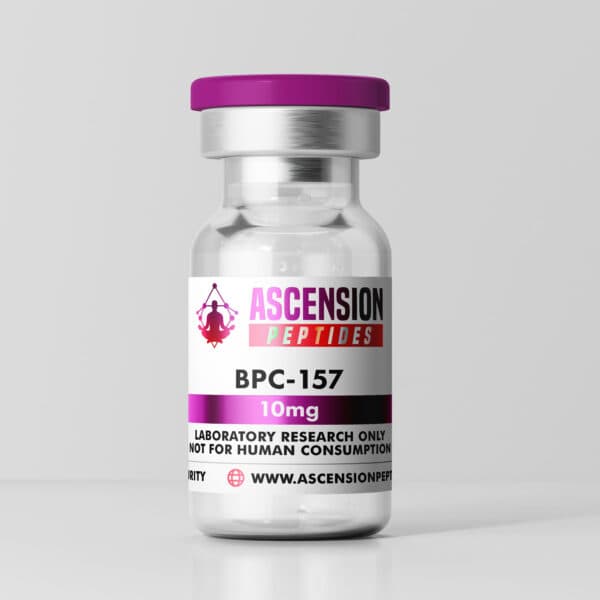
 Ascension Peptides
USA-based research vendor (Castle Rock, Colorado) publishing a per-batch Certificate of Analysis library with public lot IDs, so a vial can be matched to its own COA before and after purchase. Recent HPLC purity 99.79–99.98% across the catalog. Ships from the US and carries the full GLP-1 reference range alongside repair, longevity and cosmetic compounds.
Buy BPC-157 10mg →Affiliate link — we may earn a commission at no extra cost to you.
 Particle Peptides
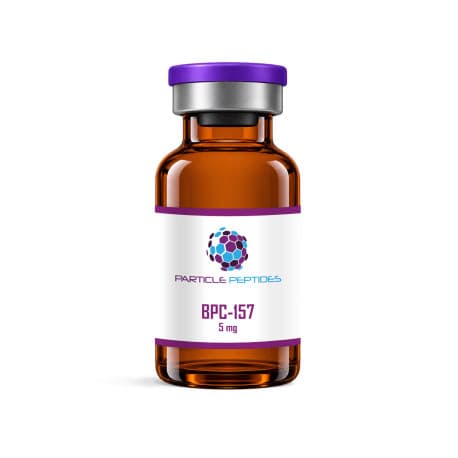
EU-based vendor (Slovakia, since 2015) shipping to EU, UK, and Switzerland. The only European supplier publishing all seven test parameters per batch (purity, identity, content, bioburden, endotoxins, heavy metals class 1 & 2). Manufacturer is cGMP / ISO 9001 / ISO 13485 compliant.
Buy BPC-157 5mg (with mannitol) →Affiliate link — we may earn a commission at no extra cost to you.
| 2 mg | lyophilized powder |
| 5 mg | lyophilized powder |
| 10 mg | lyophilized powder |
| 0.1 mg | ≈ 5 U-100 units (at 5mg / 2.5mL) |
| 0.2 mg | ≈ 10 U-100 units (at 5mg / 2.5mL) |
| 0.25 mg | ≈ 12.5 U-100 units (at 5mg / 2.5mL) |
| 0.3 mg | ≈ 15 U-100 units (at 5mg / 2.5mL) |
| 0.5 mg | ≈ 25 U-100 units (at 5mg / 2.5mL) |
How it's typically prepared
Reconstitute with bacteriostatic water and refrigerate. Most protocols dose by injection close to the site of injury (subcutaneous), though no human pharmacokinetic standard exists.
BPC-157 Dosage
Published BPC-157 protocols use 200–500 µg per dose, given one to three times daily. Dose selection in the research literature varies with the application: musculoskeletal-injury studies commonly report 200–250 µg twice daily near the affected site, while gastrointestinal-focused protocols use 250–500 µg once or twice daily, subcutaneously. No randomized human trial has established a clinically validated dose — all protocols derive from animal data and clinician case series, principally the Sikiric et al. body of work.
At the most common research-vendor reconstitution of 5 mg / 2.5 mL (2 mg/mL concentration), a 250 µg dose draws to 12.5 units on a U-100 insulin syringe. A 500 µg dose draws to 25 units at the same concentration. The calculator above accepts any vial size and BAC water volume — adjust the inputs to match your specific vial.
Most reported BPC-157 cycles run 4 to 6 weeks. Some protocols continue at a maintenance frequency of one to two doses per week afterwards; others discontinue and reassess. As with all research peptides, the absence of long-term human safety data means dose, duration, and cycling decisions should be made with a licensed provider familiar with the published literature.
BPC-157 Dosage Chart
U-100 insulin syringe units for the most common BPC-157 doses, calculated at the standard 5 mg / 2.5 mL reconstitution (2 mg/mL).
| 100 µg (0.1 mg) | 5 units · 0.05 mL |
| 200 µg (0.2 mg) | 10 units · 0.10 mL |
| 250 µg (0.25 mg) | 12.5 units · 0.125 mL |
| 300 µg (0.3 mg) | 15 units · 0.15 mL |
| 500 µg (0.5 mg) | 25 units · 0.25 mL |
Frequently asked questions
- How many units is 250 mcg of BPC-157?
- On a U-100 insulin syringe, 250 µg (0.25 mg) of BPC-157 equals 12.5 units when reconstituted at 5 mg / 2.5 mL (2 mg/mL concentration).
- What is the BPC-157 dosage in mL on an insulin syringe?
- Milliliter dosing depends entirely on the reconstitution concentration. At the standard 5 mg / 2.5 mL (2 mg/mL), a 250 µg dose is 0.125 mL, a 500 µg dose is 0.25 mL, and a 100 µg dose is 0.05 mL. At a 5 mg / 1 mL reconstitution (5 mg/mL — common from research vendors who use less BAC water), divide each volume by 2.5: 250 µg becomes 0.05 mL, 500 µg becomes 0.10 mL. The calculator above converts any vial size and BAC water volume into both mL and U-100 syringe units.
- How do I calculate the BPC-157 dose in mL for a 10 mg vial?
- A 10 mg BPC-157 vial reconstituted with 5 mL of bacteriostatic water yields a 2 mg/mL concentration — identical to the standard 5 mg / 2.5 mL preparation, so the same mL values apply: 250 µg = 0.125 mL, 500 µg = 0.25 mL. If the same 10 mg vial is reconstituted with 2.5 mL the concentration doubles to 4 mg/mL and the mL values halve: 250 µg becomes 0.0625 mL, which is hard to draw accurately on a U-100 syringe. Most compounding-pharmacy guidance favours reconstitution volumes that keep doses in the 0.1 to 0.25 mL range for measurement accuracy.
- Is BPC-157 approved by the FDA?
- BPC-157 is not FDA-approved as a drug. Following the February 2026 HHS reclassification, it can be prescribed via licensed compounding pharmacies in the United States. Outside the US it is supplied as a research-grade peptide and is not approved for human use by any major regulator.
- What's the difference between BPC-157 and 'Pentadeca Arginate'?
- Pentadeca Arginate (PDA) is a closely related arginate-salt analogue of BPC-157, marketed by some compounding pharmacies as more soluble and stable in solution. The amino-acid sequence is the same pentadecapeptide; the difference is the counter-ion. Dose conversions between BPC-157 acetate and PDA vary by compounder, but most pharmacies treat them as roughly interchangeable on a microgram-per-microgram basis. Independent pharmacokinetic comparison studies are limited.
- How long is reconstituted BPC-157 stable?
- Reconstituted BPC-157 is generally considered stable for 4 to 8 weeks when stored at 2 to 8 °C and protected from light. The bacteriostatic-water vehicle (benzyl alcohol preservative) is what defines that window; sterile water reconstitution shortens it considerably. Lyophilized powder before reconstitution typically carries an 18- to 24-month shelf life refrigerated. Always defer to the specific stability window printed on your compounding-pharmacy vial.
BPC-157 unit conversions
Pre-built lookup tables that convert BPC-157 between common units at the reference 5mg / 2.5mL concentration.
Stacks containing BPC-157
Related references
- TB-500 — dosage calculator, reconstitution chart, and sources.
- KPV — dosage calculator, reconstitution chart, and sources.
- Larazotide — dosage calculator, reconstitution chart, and sources.
PeptideDose is an educational reference. It is not medical advice and does not replace consultation with a licensed healthcare provider. Doses shown in presets are derived from published protocols and product labels — they are not personal recommendations.