
GHK-Cu Calculator
GHK-Cu (also known as Copper Peptide) reconstitution and dosage reference — calculate vial concentration, BAC water volume, and exact syringe units below.
At the reference preset of a 50mg GHK-Cu vial reconstituted with 5 mL of bacteriostatic water, a 2mg dose measures 20 units on a U-100 insulin syringe.
GHK-Cu is the human-derived tripeptide glycyl-L-histidyl-L-lysine bound to a copper ion.
- Concentration
- 10 mg/mL
- Draw volume
- 0.2 mL
- Units (U-100)
- 20
- Doses per vial
- ≈ 25
- Reference preset
- 50mg · 5mL · 2mg
Reference values from the default preset — adjust the calculator below for your vial.
How to use this calculator›
- 1. Vial — the peptide amount printed on the vial, in milligrams.
- 2. BAC water — the bacteriostatic water added to the vial. More water means a lower concentration and a larger, easier-to-read draw.
- 3. Dose — the single dose being measured, in milligrams.
- 4. Syringe — the barrel being drawn into. The diagram rescales to that syringe, so the same dose sits at a different mark on a 0.3 mL barrel than on a U-100.
Educational reference only — not medical advice or a dosing recommendation.
What is GHK-Cu?
GHK-Cu is the human-derived tripeptide glycyl-L-histidyl-L-lysine bound to a copper ion. It is used both subcutaneously (for systemic effects on collagen synthesis and wound healing) and topically (for skin and hair). Subcutaneous dosing protocols are typically 1–3 mg per dose.
Where researchers source this
Vendors below have been manually vetted for third-party COA practice and shipping reliability. Verify the current Certificate of Analysis on the vendor's product page before purchase.
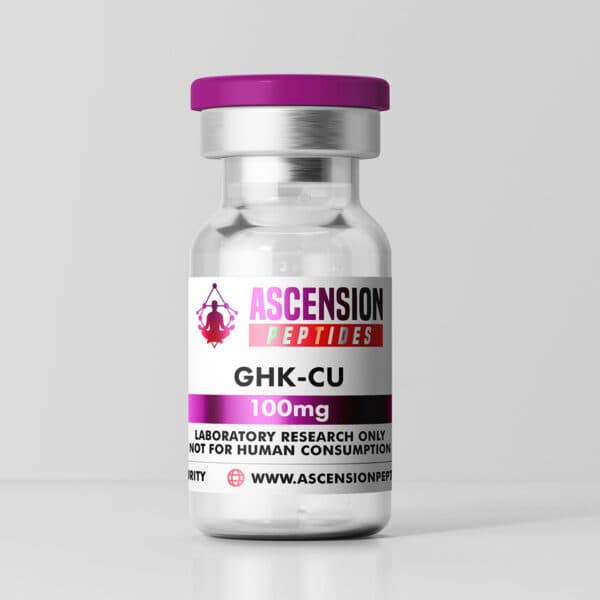
 Ascension Peptides
USA-based research vendor (Castle Rock, Colorado) publishing a per-batch Certificate of Analysis library with public lot IDs, so a vial can be matched to its own COA before and after purchase. Recent HPLC purity 99.79–99.98% across the catalog. Ships from the US and carries the full GLP-1 reference range alongside repair, longevity and cosmetic compounds.
Buy GHK-Cu 100mg (3mL) →Affiliate link — we may earn a commission at no extra cost to you.
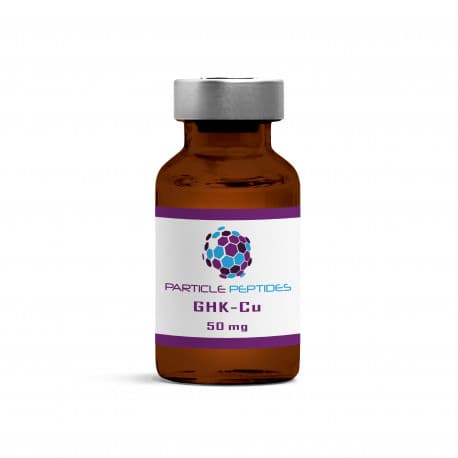
 Particle Peptides
EU-based vendor (Slovakia, since 2015) shipping to EU, UK, and Switzerland. The only European supplier publishing all seven test parameters per batch (purity, identity, content, bioburden, endotoxins, heavy metals class 1 & 2). Manufacturer is cGMP / ISO 9001 / ISO 13485 compliant.
Buy GHK-Cu 50mg →Affiliate link — we may earn a commission at no extra cost to you.
| 50 mg | lyophilized powder |
| 100 mg | lyophilized powder |
| 200 mg | lyophilized powder |
| 1 mg | ≈ 10 U-100 units (at 50mg / 5mL) |
| 2 mg | ≈ 20 U-100 units (at 50mg / 5mL) |
| 3 mg | ≈ 30 U-100 units (at 50mg / 5mL) |
| 5 mg | ≈ 50 U-100 units (at 50mg / 5mL) |
How it's typically prepared
Vials are typically blue-tinted because of the copper complex. Reconstitute with BAC water; refrigerate. Avoid contact with metal — use plastic syringes only.
GHK-Cu Dosage
GHK-Cu dosage protocols differ markedly between the two routes of administration. Subcutaneous injection protocols typically use 1–3 mg per dose, given daily or on alternate days. Cosmetic topical formulations — serums and creams — typically contain 0.05% to 0.2% GHK-Cu (roughly 0.5–2 mg per gram of product), applied directly to skin or scalp.
At the standard research-vendor reconstitution of 50 mg / 5 mL (10 mg/mL concentration), a 1 mg dose draws to 10 units on a U-100 insulin syringe; a 2 mg dose to 20 units; a 3 mg dose to 30 units. Use plastic syringes only — the copper ion can react with metal surfaces.
Published GHK-Cu work originates with Loren Pickart's foundational research on copper-peptide complexes in skin. Subcutaneous protocols in research-peptide practice are inferred from preclinical data; no large-scale human trial has established an approved dose for systemic use.
GHK-Cu Dosage Chart
U-100 insulin syringe units for the most common GHK-Cu subcutaneous doses, calculated at the standard 50 mg / 5 mL reconstitution (10 mg/mL).
| 1 mg | 10 units · 0.10 mL |
| 2 mg | 20 units · 0.20 mL |
| 3 mg | 30 units · 0.30 mL |
| 5 mg | 50 units · 0.50 mL |
GHK-Cu Side Effects
Reports of GHK-Cu side effects in the published literature are sparse and largely confined to topical or cosmetic use. Subcutaneous injection in research-peptide practice carries the additional risk profile common to all peptide injections.
- Mild redness or irritation at injection or application site
- Temporary blue-green skin discoloration near injection site (from the copper complex)
- Bruising at injection site
- Allergic reaction to copper
- Theoretical systemic copper accumulation with extended high-dose use (not clinically documented in published research)
Frequently asked questions
- Why is GHK-Cu blue?
- The blue color comes from the copper(II) ion bound to the GHK tripeptide. It is a normal characteristic of the reconstituted solution.
- Subcutaneous or topical?
- Both routes are used. Subcutaneous is associated with systemic effects; topical is most often used for cosmetic skin and scalp applications.
PeptideDose is an educational reference. It is not medical advice and does not replace consultation with a licensed healthcare provider. Doses shown in presets are derived from published protocols and product labels — they are not personal recommendations.