
MOTS-c Calculator
MOTS-c reconstitution and dosage reference — calculate vial concentration, BAC water volume, and exact syringe units below.
At the reference preset of a 10mg MOTS-c vial reconstituted with 2 mL of bacteriostatic water, a 5mg dose measures 100 units on a U-100 insulin syringe.
MOTS-c is a 16-amino-acid mitochondrial-derived peptide encoded within the 12S rRNA mitochondrial gene.
- Concentration
- 5 mg/mL
- Draw volume
- 1 mL
- Units (U-100)
- 100
- Doses per vial
- ≈ 2
- Reference preset
- 10mg · 2mL · 5mg
Reference values from the default preset — adjust the calculator below for your vial.
How to use this calculator›
- 1. Vial — the peptide amount printed on the vial, in milligrams.
- 2. BAC water — the bacteriostatic water added to the vial. More water means a lower concentration and a larger, easier-to-read draw.
- 3. Dose — the single dose being measured, in milligrams.
- 4. Syringe — the barrel being drawn into. The diagram rescales to that syringe, so the same dose sits at a different mark on a 0.3 mL barrel than on a U-100.
Educational reference only — not medical advice or a dosing recommendation.
What is MOTS-c?
MOTS-c is a 16-amino-acid mitochondrial-derived peptide encoded within the 12S rRNA mitochondrial gene. Animal studies report effects on metabolism, insulin sensitivity, and exercise capacity.
Where researchers source this
Vendors below have been manually vetted for third-party COA practice and shipping reliability. Verify the current Certificate of Analysis on the vendor's product page before purchase.
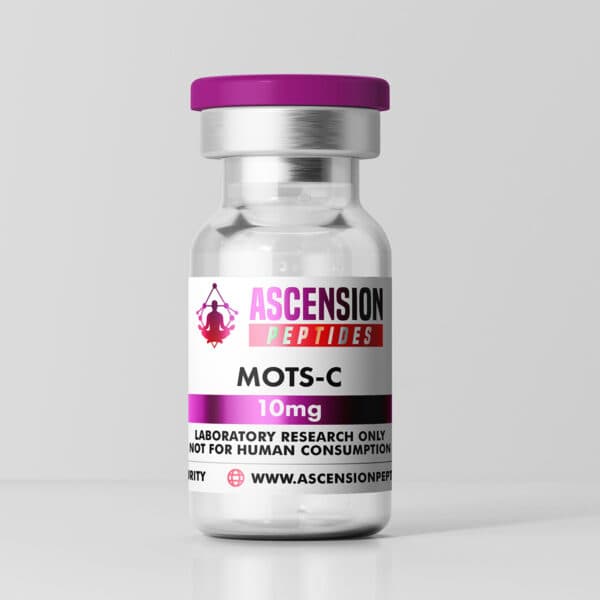
 Ascension Peptides
USA-based research vendor (Castle Rock, Colorado) publishing a per-batch Certificate of Analysis library with public lot IDs, so a vial can be matched to its own COA before and after purchase. Recent HPLC purity 99.79–99.98% across the catalog. Ships from the US and carries the full GLP-1 reference range alongside repair, longevity and cosmetic compounds.
Buy MOTS-c 10mg →Affiliate link — we may earn a commission at no extra cost to you.
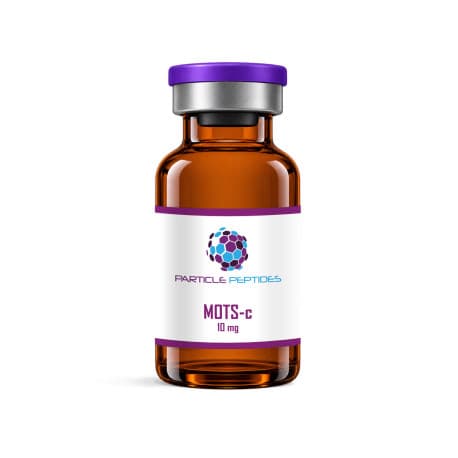
 Particle Peptides
EU-based vendor (Slovakia, since 2015) shipping to EU, UK, and Switzerland. The only European supplier publishing all seven test parameters per batch (purity, identity, content, bioburden, endotoxins, heavy metals class 1 & 2). Manufacturer is cGMP / ISO 9001 / ISO 13485 compliant.
Buy MOTS-c 10mg (with mannitol) →Affiliate link — we may earn a commission at no extra cost to you.
| 5 mg | lyophilized powder |
| 10 mg | lyophilized powder |
| 2 mg | ≈ 40 U-100 units (at 10mg / 2mL) |
| 5 mg | ≈ 100 U-100 units (at 10mg / 2mL) |
| 10 mg | ≈ 200 U-100 units (at 10mg / 2mL) |
How it's typically prepared
Reconstitute with BAC water; refrigerate.
MOTS-c Dosage
MOTS-c dosage protocols in research-peptide practice typically use 5–10 mg per dose, given subcutaneously two to three times per week. The dose range derives from preclinical animal studies and early human pilot work — no large randomized trial has established a clinically approved MOTS-c dose.
At the standard research-vendor reconstitution of 10 mg / 2 mL (5 mg/mL concentration), a 5 mg dose draws to 100 units on a U-100 insulin syringe — the full length of a standard 1 mL insulin syringe. A 2 mg starter dose draws to 40 units. The volume per dose at 5 mg/mL means a single 10 mg vial provides one or two doses depending on protocol.
MOTS-c is a mitochondrial-derived peptide — encoded within the 12S rRNA gene rather than nuclear DNA — and signals between mitochondria and the nucleus. Reported preclinical effects include improvements in insulin sensitivity and exercise capacity, with most research-peptide protocols cycling for 8 to 12 weeks before reassessment.
MOTS-c Dosage Chart
U-100 insulin syringe units for common MOTS-c doses at the standard 10 mg / 2 mL reconstitution (5 mg/mL).
| 2 mg | 40 units · 0.40 mL |
| 5 mg | 100 units · 1.00 mL |
| 10 mg | 200 units · 2.00 mL (full vial) |
Frequently asked questions
- What is MOTS-c?
- A peptide encoded by mitochondrial DNA that signals between mitochondria and the nucleus, with metabolic effects in animal models.
Related references
- NAD+ — dosage calculator, reconstitution chart, and sources.
- SS-31 — dosage calculator, reconstitution chart, and sources.
- 5-Amino-1MQ — dosage calculator, reconstitution chart, and sources.
PeptideDose is an educational reference. It is not medical advice and does not replace consultation with a licensed healthcare provider. Doses shown in presets are derived from published protocols and product labels — they are not personal recommendations.