
Cagrilintide Calculator
Cagrilintide (also known as AM833) reconstitution and dosage reference — calculate vial concentration, BAC water volume, and exact syringe units below.
At the reference preset of a 9mg Cagrilintide vial reconstituted with 2 mL of bacteriostatic water, a 0.6mg dose measures 13.33 units on a U-100 insulin syringe.
Cagrilintide is a long-acting, lipidated analogue of the endogenous pancreatic peptide hormone amylin, developed by Novo Nordisk and identified in early literature as AM833.
- Concentration
- 4.5 mg/mL
- Draw volume
- 0.133 mL
- Units (U-100)
- 13.33
- Doses per vial
- ≈ 15
- Reference preset
- 9mg · 2mL · 0.6mg
Reference values from the default preset — adjust the calculator below for your vial.
How to use this calculator›
- 1. Vial — the peptide amount printed on the vial, in milligrams.
- 2. BAC water — the bacteriostatic water added to the vial. More water means a lower concentration and a larger, easier-to-read draw.
- 3. Dose — the single dose being measured, in milligrams.
- 4. Syringe — the barrel being drawn into. The diagram rescales to that syringe, so the same dose sits at a different mark on a 0.3 mL barrel than on a U-100.
Educational reference only — not medical advice or a dosing recommendation.
What is Cagrilintide?
Cagrilintide is a long-acting, lipidated analogue of the endogenous pancreatic peptide hormone amylin, developed by Novo Nordisk and identified in early literature as AM833. Like native amylin, cagrilintide activates the amylin and calcitonin receptors in the area postrema and dorsal vagal complex, contributing to satiety, slowed gastric emptying, and reduced postprandial glucagon — mechanisms distinct from GLP-1 receptor agonism. The molecule's fatty-acid side chain extends the circulating half-life to roughly 7 to 8 days, supporting once-weekly subcutaneous dosing. Cagrilintide is most often studied as a partner to semaglutide; the fixed-ratio combination known as CagriSema was reported in REDEFINE-1 to achieve approximately 22.7% mean weight reduction over 68 weeks, exceeding either component alone. Cagrilintide is investigational; as of 2026 it is not FDA-approved as a single agent.
Where researchers source this
Vendors below have been manually vetted for third-party COA practice and shipping reliability. Verify the current Certificate of Analysis on the vendor's product page before purchase.

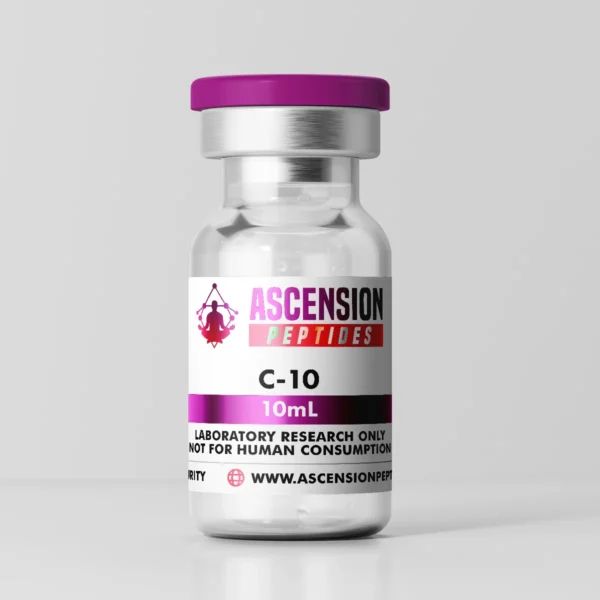
| 4.5 mg | lyophilized powder |
| 9 mg | lyophilized powder |
| 0.3 mg | ≈ 6.7 U-100 units (at 9mg / 2mL) |
| 0.6 mg | ≈ 13.3 U-100 units (at 9mg / 2mL) |
| 1.2 mg | ≈ 26.7 U-100 units (at 9mg / 2mL) |
| 2.4 mg | ≈ 53.3 U-100 units (at 9mg / 2mL) |
| 4.5 mg | ≈ 100 U-100 units (at 9mg / 2mL) |
How it's typically prepared
Reconstitute the lyophilized powder with bacteriostatic water, injecting slowly against the inner wall of the vial and swirling gently to dissolve. Refrigerate the reconstituted solution at 2 to 8 °C. Compounded cagrilintide vial sizes vary by pharmacy — 4.5 mg and 9 mg presentations are the most common. At the default 9 mg / 2 mL reconstitution (4.5 mg/mL concentration), a 0.6 mg dose draws to roughly 13.3 units on a U-100 insulin syringe.
Cagrilintide Dosage
Phase 2 and Phase 3 trial protocols for cagrilintide use a stepwise weekly titration over 16 to 20 weeks before reaching the maintenance dose. The standard ladder is 0.25 mg weekly for four weeks, 0.5 mg weekly for four weeks, 1 mg weekly for four weeks, 1.7 mg weekly for four weeks, and 2.4 mg weekly as maintenance — the same five-step pattern used for semaglutide in the Wegovy label. This slow escalation is driven by amylin-class gastrointestinal tolerability, which is the dose-limiting consideration in most reported trials. Some compounded research protocols use a simpler four-step titration topping out at 4.5 mg weekly, though the published trial data extends to 2.4 mg.
When cagrilintide is paired with semaglutide as CagriSema, each component is titrated on the same weekly schedule. The REDEFINE-1 protocol used a fixed 1:1 dose ratio (e.g. 2.4 mg of cagrilintide plus 2.4 mg of semaglutide at maintenance), with both peptides delivered in a single subcutaneous injection from the trial's combined-vial formulation. Compounded pairings in research practice typically reconstitute each peptide separately and co-draw both into a single syringe at injection time so the doses can be adjusted independently if one component is tolerated less well than the other.
At the default compounded reconstitution of 9 mg in 2 mL of bacteriostatic water (4.5 mg per millilitre), the U-100 insulin-syringe arithmetic across the titration is: 0.25 mg draws to roughly 5.6 units, 0.5 mg to 11.1 units, 1 mg to 22.2 units, 1.7 mg to 37.8 units, and 2.4 mg to 53.3 units. The calculator above accepts any vial size and reconstitution volume — 4.5 mg vials reconstituted in 2 mL halve the concentration and double the unit counts. As with all investigational peptides, dose selection and titration timing are clinical decisions that belong with a licensed provider familiar with the published trial literature.
Cagrilintide Dosage Chart
U-100 insulin syringe units for the standard cagrilintide weekly-titration ladder, calculated at the default 9 mg / 2 mL reconstitution (4.5 mg/mL concentration). At 4.5 mg / 2 mL the concentration halves to 2.25 mg/mL and the unit counts double.
| 0.25 mg (titration week 1–4) | ≈ 5.6 units · 0.056 mL |
| 0.5 mg (week 5–8) | ≈ 11.1 units · 0.111 mL |
| 1 mg (week 9–12) | ≈ 22.2 units · 0.222 mL |
| 1.7 mg (week 13–16) | ≈ 37.8 units · 0.378 mL |
| 2.4 mg (maintenance) | ≈ 53.3 units · 0.533 mL |
Cagrilintide Side Effects
The published cagrilintide trials (Lau et al., Lancet 2021; the REDEFINE programme) report gastrointestinal events as the dominant, dose-limiting side-effect pattern, consistent with the amylin-analogue class. Because cagrilintide is investigational and trial populations are smaller than for approved GLP-1 drugs, less is known about long-term and rare events. The list below summarises events reported in trial data and is not a complete safety profile.
- Nausea
- Vomiting
- Diarrhea
- Constipation
- Decreased appetite
- Dyspepsia (indigestion)
- Injection-site reactions
- Gallbladder events (per amylin / GLP-1 class data)
- Increased resting heart rate
- Hypersensitivity reactions
Frequently asked questions
- What is the typical cagrilintide dose?
- Phase 3 trial protocols titrate weekly from 0.25 mg up to a 2.4 mg maintenance dose over 16 to 20 weeks, mirroring the Wegovy semaglutide ladder. The slow escalation is driven by amylin-class gastrointestinal tolerability. Some compounded protocols continue titration past 2.4 mg up to 4.5 mg weekly, though the published trial data extends to 2.4 mg. Dose, escalation pace, and maintenance level are clinical decisions and should be made with a licensed provider.
- What is the cagrilintide dose with tirzepatide or semaglutide?
- The most-studied combination is cagrilintide with semaglutide (CagriSema), where both components are titrated on the same weekly schedule at a 1:1 dose ratio — for example, 2.4 mg of each at maintenance. Cagrilintide with tirzepatide is not an established trial regimen; clinicians who combine the two off-label typically use the cagrilintide ladder (0.25 → 2.4 mg weekly) alongside the standard tirzepatide titration (2.5 → 15 mg weekly), but no published trial has validated this pairing. As always, combining investigational peptides is a clinical decision.
- How many units of a U-100 insulin syringe is 0.6 mg of cagrilintide?
- At the default 9 mg / 2 mL reconstitution (4.5 mg/mL concentration), 0.6 mg of cagrilintide draws to approximately 13.3 units on a U-100 insulin syringe. The calculator above will recompute the unit count for any vial size and reconstitution volume.
- What is CagriSema?
- CagriSema is a fixed-ratio combination of cagrilintide and semaglutide developed by Novo Nordisk. The REDEFINE-1 Phase 3 trial reported approximately 22.7% mean body-weight reduction over 68 weeks at the 2.4 mg / 2.4 mg dose pair, exceeding the effect of either component as monotherapy. As of 2026 the combination remains investigational and is not FDA-approved.
- Is cagrilintide FDA-approved?
- No. As of 2026, cagrilintide is investigational both as a single agent and as part of the CagriSema combination. It is supplied for clinical use only through licensed compounding pharmacies operating under the post-February 2026 HHS reclassification.
- How is cagrilintide different from semaglutide?
- Mechanism is the main difference. Semaglutide is a GLP-1 receptor agonist; cagrilintide is a long-acting amylin analogue acting at the amylin and calcitonin receptors in the area postrema and dorsal vagal complex. The two mechanisms are believed to be complementary, which is the pharmacological rationale for the CagriSema fixed-ratio combination. Both are administered once weekly by subcutaneous injection.
Cagrilintide unit conversions
Pre-built lookup tables that convert Cagrilintide between common units at the reference 9mg / 2mL concentration.
Other GLP-1 peptides
PeptideDose is an educational reference. It is not medical advice and does not replace consultation with a licensed healthcare provider. Doses shown in presets are derived from published protocols and product labels — they are not personal recommendations.